Gregory Masouras
PRICE – 2200e
LEAD
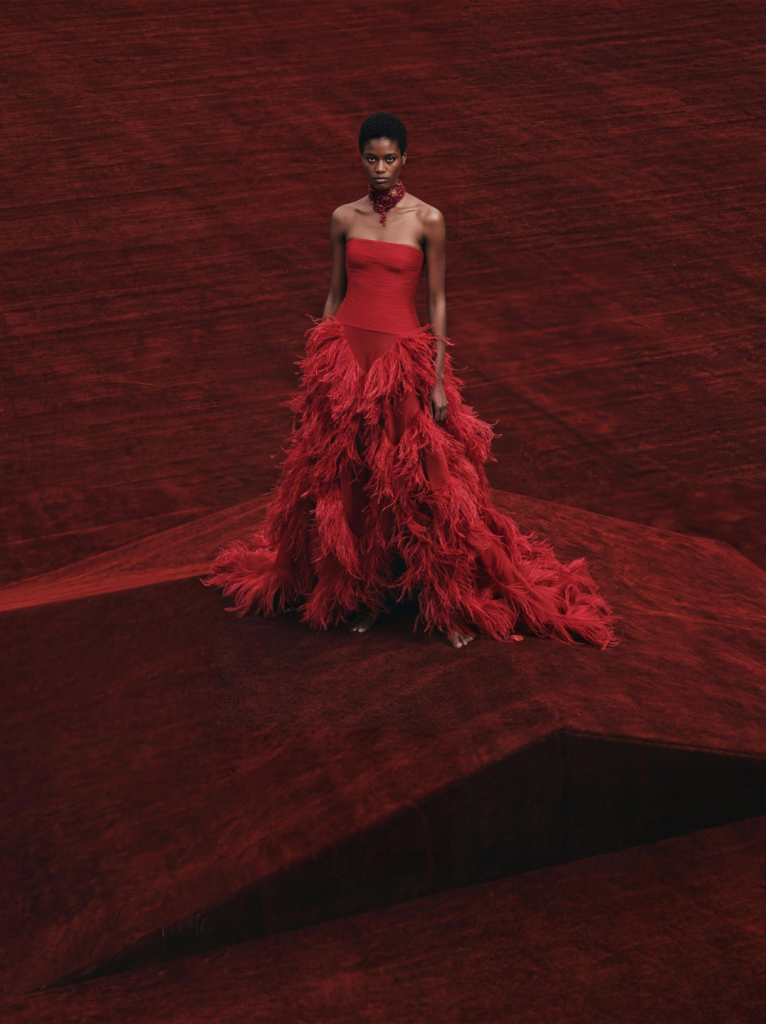
A woman dressed in Valentino inhabits a crimson world where fashion and architecture merge, transforming the room into an extension of her identity.
STATEMENT
The room mirrors the woman until the two become inseparable. A red silhouette dissolves into a deep crimson architectural landscape, blurring the distinction between what is worn and what is inhabited.
The work explores how interior spaces absorb our emotions, memories and expressions of identity. Red becomes both garment and environment, suggesting desire, intimacy, strength and self-expression.
The figure stands at the centre of the composition, yet it is unclear whether she belongs to the room or whether the room has been created around her.
Here, home becomes a reflection of the self.
WORK DETAILS
Medium – AI-generated digital artwork; conceptual fashion imagery
Paper – Hahnemühle Photo Rag Baryta (recommended; see Print & Display)
Print dimensions – 60x75cm
Image dimensions – 60x75cm
Margins / mount – no mount
Frame / presentation – slim black or dark walnut frame, Italian moulding; anti-reflective glazing
Edition – 7 prints
Certificate – individual certificate of authenticity
PRINT & DISPLAY
Recommended material – smooth baryta fine-art paper with a subtle satin sheen rather than heavily textured matte.
Why this material for this image – the photograph depends on tonal depth within a nearly monochrome red palette, from the matte background to the feathered texture of the gown. Baryta preserves the richness of the reds and keeps definition in the dress, floor and shadows without flattening the image. A textured matte paper risks softening the tonal shifts and reducing the sculptural quality of the composition.
Margins and framing – slim black or dark walnut frame, no mount. A wide white mount would compete with the immersive monochrome field and weaken the intensity of the image. Anti-reflective glazing is strongly recommended.
Light and viewing distance – soft, directed gallery lighting at approximately 30°, neutral to slightly warm (3000–3500 K). The work reads from two to three metres, while closer viewing reveals the feathered detailing and tonal variation throughout the red surface.
Type of space – private collections, dressing rooms, fashion-oriented interiors and curated hospitality spaces. Particularly effective against deep-toned walls such as oxblood, warm taupe, charcoal or soft greige, alongside dark wood, stone and muted metallic finishes.
Avoid – ornate frames, harsh even lighting and visually busy interiors. Avoid small formats that flatten the tonal subtlety of the image.
Leave a Reply