Gregory Masouras
PRICE – 2200e
LEAD
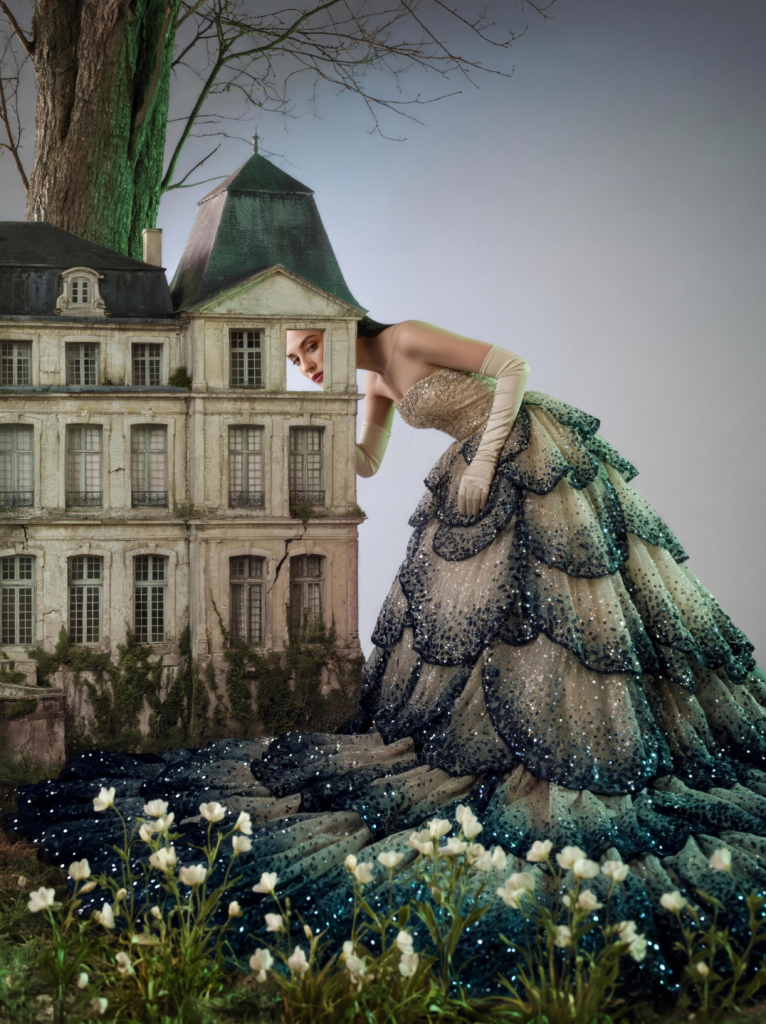
A monumental figure dressed in Dior leans into a weathered château, her elaborate gown unfolding across the landscape like an imagined extension of the architecture.
STATEMENT
A house can be more than a physical structure. It can hold memories, fantasies and entire imagined worlds.
In this work, the relationship between body and architecture becomes intimate and unexpected. A monumental figure bends toward a historic château, while her dress expands across the garden, becoming part of the surrounding landscape.
The contrast between the delicate, intricately embellished gown and the weathered architecture creates a dialogue between fragility and permanence.
Playing with scale and surreal proportions, the work explores how the places we inhabit can become reflections of our inner worlds.
WORK DETAILS
Medium – AI-generated digital artwork; conceptual fashion imagery
Paper – Hahnemühle Photo Rag Baryta (recommended; see Print & Display)
Print dimensions – 80x100cm
Image dimensions – 80x100cm
Margins / mount – no mount
Frame / presentation – black frame, Italian moulding; anti-reflective glazing
Edition – 7 prints
Certificate – individual certificate of authenticity
PRINT & DISPLAY
Recommended material – smooth baryta fine-art paper with a subtle satin finish, rather than heavily textured matte or high-gloss.
Why this material for this image – the photograph relies on the contrast between weathered stone architecture, delicate ivory flowers and the shimmering layers of the emerald-toned gown. Baryta preserves the fine architectural textures and individual sequins while maintaining depth in the darker fabric and foliage. A heavily textured matte surface risks softening the intricate details and diminishing the luminous quality of the dress.
Margins and framing – slim dark bronze or black frame, narrow or no mount. Dark bronze complements the aged architecture and muted gold tones of the gown. A wide white border would interrupt the immersive, theatrical composition.
Anti-reflective glazing is strongly recommended.
Light and viewing distance – soft, directed gallery lighting at approximately 30°, neutral to slightly warm (3000–3500 K). Controlled illumination reveals the shimmer of the sequins without washing out the delicate stonework or pale flowers. The work reads from three metres and rewards closer inspection.
Type of space – elegant residential interiors, private collections, dressing rooms, boutique hotels and fashion-oriented spaces. Particularly effective against warm taupe, muted sage, stone grey or deep olive walls, alongside antique wood, travertine and aged brass.
Avoid – ornate gold frames, harsh direct lighting, glossy glazing and visually crowded interiors. Avoid small formats that obscure the relationship between the figure, architecture and floral foreground.
Leave a Reply