Lola Graham
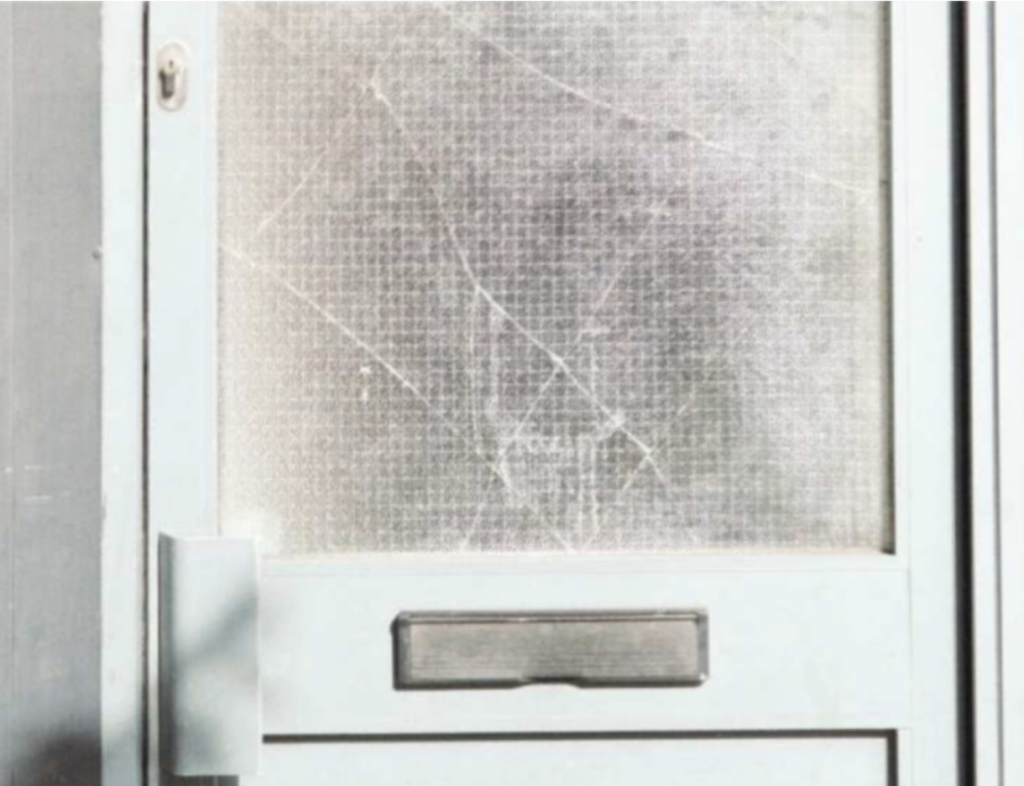
80 × 60 cm — 1000 EUR
L E A D
Photographed in London in August 2025. A door: reeded glass gone opaque with scratches, a worn letterplate, pale paint. Nothing has been left here — the surface itself is the residue.
S T A T E M E N T
(dis)placement is a visual investigation into the material residues of human activity within the contemporary urban environment. It is a meditation on consumption, memory, and what the things we cast aside reveal about us.
(dis)placement was shot in London in 2025, beginning with long walks through the city and attention to things that usually escape notice: abandoned furniture, discarded packaging, objects that have lost their owner and their original purpose.
I am interested in the moment when something stops being useful but hasn’t yet disappeared. On the street, these objects exist between presence and absence — evidence of someone’s life, decision, or circumstance.
Outside their familiar context, discarded things begin to resemble still lifes, composed accidentally by the city itself. They retain traces of human presence while quietly speaking of transience, displacement, and inevitable change.
(dis)placement is a reflection on memory, consumption, and the relationship between people and urban space — on what we leave behind, and on the stories that continue to exist long after their owners have left the frame.
W O R K D E T A I L S
Medium — colour photograph. Digital capture, printed, then scanned; the work is assembled from the scan.
Paper — Hahnemühle Photo Rag, smooth matte cotton
Print dimensions — 80 x 60 cm
Image dimensions — 82 x 62 cm
Margins / mount — narrow cool off-white mount (1cm)
Frame / presentation — narrow pale frame, off-white, light grey or chrome frame.
Edition — limited edition – 5 prints
Certificate — individual certificate of authenticity, naming the series
P R I N T & D I S P L A Y
Recommended material — smooth matte cotton rag.
Why this material for this image — the subject is a surface: reeded glass, scratches, chipped paint, the dull metal of the letterplate. Matte paper reproduces a matte subject without adding a second surface over it. Gloss puts a shine on glass that is specifically not shiny in the picture, and that is the one thing the image can’t survive. Smooth rather than textured, because the scratch marks are fine and need the resolution.
Margins and framing — narrow pale frame, off-white, light grey or chrome, narrow mount in a cool off-white. The whole picture is a cool pale palette; a warm wood frame fights it, and a black frame turns a quiet image into a statement it isn’t making.
Light and viewing distance — neutral to slightly cool light, 4000–5000 K. Warm light yellows the pale blue-green paint, which is the only colour in the frame. Reads from two metres as a flat plane, and rewards close looking, where the scratch drawing resolves.
Type of space — light or mid-tone walls, hallways, entrances, offices, kitchens. The image is quiet and flat and sits well in a place people pass through.
Avoid — warm lighting, heavy frames.
Leave a Reply